
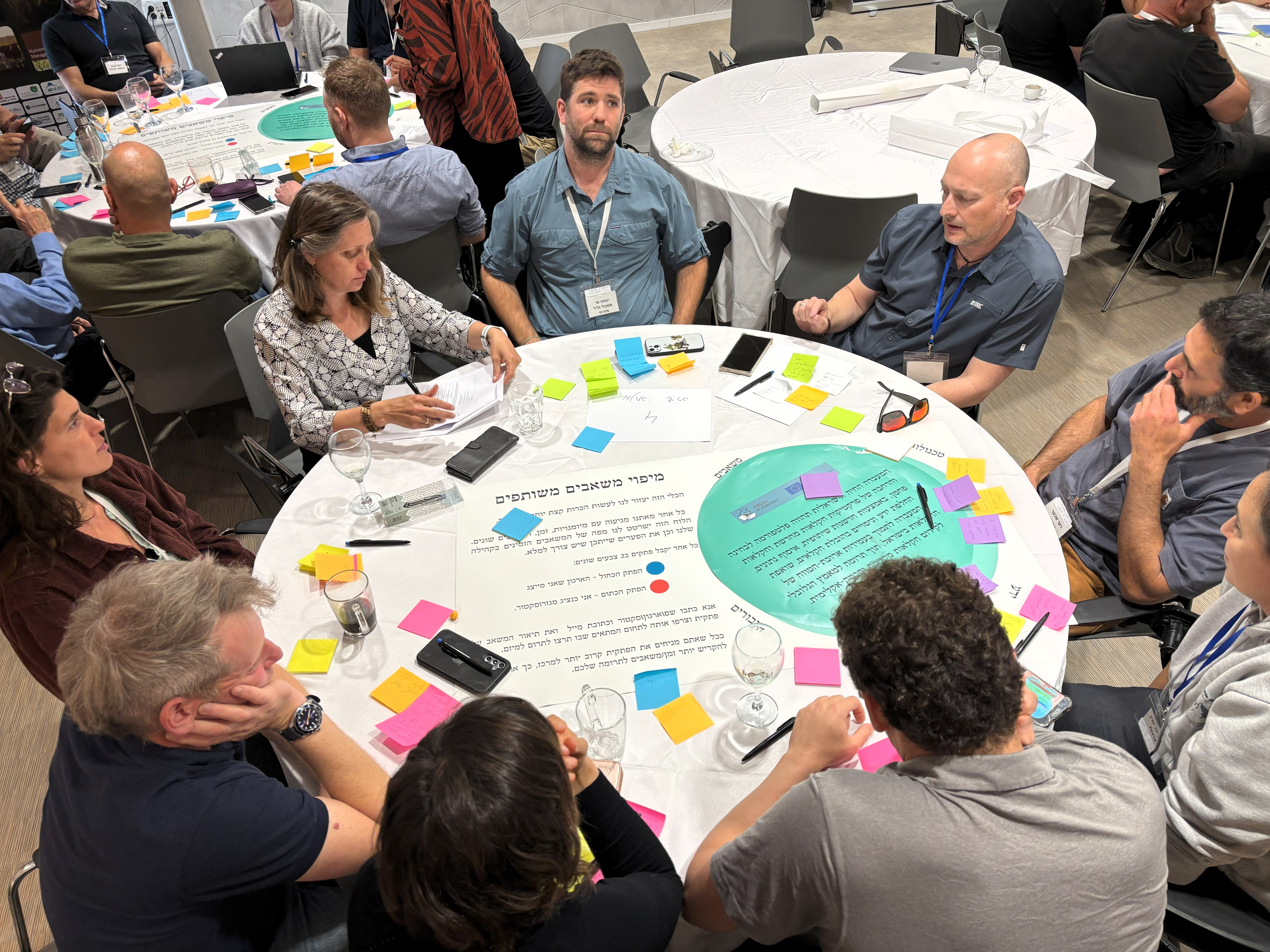
MIGAL – Galilee Research Institute is excited to announce the official launch of the RAGILL Living Lab, part of the European Union’s LILAS4SOILS project, funded under the Horizon Europe programme and the EU Mission “A Soil Deal for Europe”, and led by EIT Food.
RAGILL is Israel’s designated Living Lab within the international LILAS4SOILS consortium, which includes 22 partners from 11 countries. The lab s a collaborative initiative for researchers, farmers, local authorities, and stakeholders to work together to co-develop and test practical solutions for regenerative agriculture, soil carbon sequestration, carbon farming, and the development of sustainable business models in the Galilee.
Led by MIGAL in partnership with GRANOT and the Upper Galilee Regional Council , RAGILL aims to promote regenerative practices, improve climate resilience in agriculture, and contribute local insights to a broader European effort focused on restoring and protecting healthy soils.
The launch of RAGILL marks a major milestone in MIGAL’s mission to deliver science-driven solutions for sustainable agriculture, while strengthening regional and international collaboration.
Find more details on LILAS4SOILS official website: https://www.lilas4soils.eu/