
Our research group covers a broad range of issues related to Environmental Physical Chemistry. Among them:
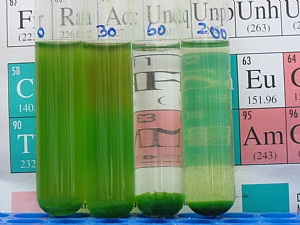 Water and wastewater treatment aspects: removal of pollutants, photodegradation and photocatalysis, removal of suspended particles in water and industrial effluents (winery, olive mill, cowshed, dairy).
- Clay-organic interactions: analytical aspects and/or applications of organoclays or clay-polymer nanocomposites.
- Thermodynamic and kinetics in sorption and desorption processes, including several and extended theoretical aspects. Emphasis on adsorption/desorption model to charged and neutral surfaces, and kinetic calculations.
- Stabilization and catalyzed degradation of chemicals on colloidal surfaces. Photostabilization, photodegradation, photocatalysis and metachromasy
- Development of adsorption and filtration techniques, including regeneration of the sorbent.
- Micrometeorological and other aspects of particulate pollutants in air.
- Educational applications of aquatic environmental chemistry techniques, and other physical chemistry aspects.
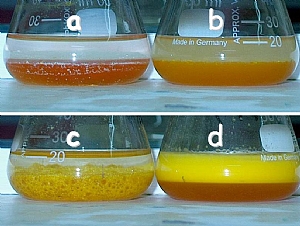
- Additional applications of clays, organoclays and nanocomposites as slow-release or "target delivery" platforms (pesticides, fragrance, fertilizers, proteins, medications, etc.).
- Development of analytical spectroscopy-based techniques.
- Cooperation with other discipline teams: research on slow release of vaccines, adsorption of fats, oils and cholesterol, precise agriculture, irrigation and fertilizing, spectroscopic analysis for agriculture, educational demonstrations, etc.
Prof. Giora Rytwo








The Environmental Physical Chemistry Laboratory located at MIGAL laboratories, and working jointly with Tel Hai College includes all the equipment needed for Environmental Analytical Chemistry measurements. This includes analytical and semi-analytical balances, glassware and stands and hardware needed for filtering column experiments, high precision pumps, pH-meters, dissolved oxygen, CO2, turbidity, EC and ORP measuring devices, stirring devices, centrifuges, etc. Analytical instruments essential for adsorption experiments, quantitative analysis of solutes and effluents and study of the interactions between clays and organic compounds in particular and organic and inorganic materials in general. Instruments include:
- A diode array UV-visible spectrophotometer (HP8452A), a SMART portable photometer, and a Stellar-Net fiber optic based spectrometer calibrated for quantitative energy measurements allows to cover a wide range of UV-Visible spectroscopy measurements.
- An FTIR spectrophotometer (Nicolet Avatar 320), including a diamond Single Bounce ATR device, and a quantitative OMNIC 8.0 software, including quantification facilities and a SPECTA analysis program.
- A Bruker S2-Ranger brand new EDXRF with all possible measurements modes (including solids, liquids, loose powders, etc) is fully operational. It enables very accurate standard based measurements, as standardless evaluation based on the spectrum measured.
- A MUTEK 03 Particle Charge Detector allows us to measure charge of colloidal particles in effluents, and of the clays and other nanoparticles before and after pollution adsorption and degradation.
- A LUMISizer Dispersion Analyzer equipped with a Particle Size and Sedimentation Velocity Analysis module allows us to determine several relevant colloidal properties.
- A XIGO Specific Surface Area instrument, is used to evaluate changes in suspension, and interactions between the suspended and dispersed phases, including evaluation of specific surface area under wet conditions. The instrument is based on NMR relaxation time of the protons in the solvent (water) due to interaction with the suspended particles.
- A Rayonet irradiation chamber might be used for photochemical processes, and combined with the fiber optics spectrometer allows full monitoring of photoreactions.
- A tailor- self-made photocatalytic device (with a PCT patent on the separation stage) allowing to perform photodegradation flow-through experiments including addition of auxiliary materials (ozone, H2O2, oxygen, air).